Abortion in America
Texas’ abortion ban reshaped their junior year of high school
Synopsis
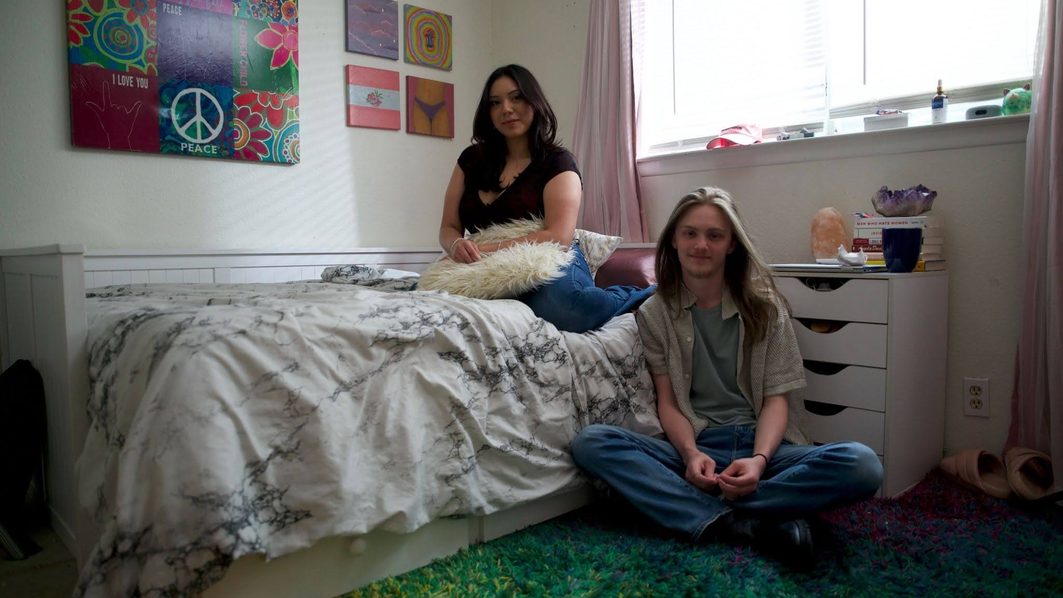
When DakotaRei, a Xicana teen who was 17 at the time, found out she was pregnant, she and her high school boyfriend, Tanner, had to travel more than 700 miles to New Mexico for an abortion because of Texas’ abortion ban.
They spoke with Abortion in America in Texas about what abortion bans mean for teenagers and the barriers Texas created as they tried to access both birth control and abortion care. The passage below has been edited from the original transcript for length and clarity.
DakotaRei: When I found out I was pregnant, we were juniors in high school. The first thing I did was send Tanner a picture of the positive pregnancy test. I don’t even remember what I said. It was nine in the morning, before first period. I remember Tanner was in the courtyard at school. I don’t even know how to describe what I was feeling. It was overwhelming, it was doom, it was guilt, it was confusion. Just a million things running through my mind, like ‘How did I get here? What do I do next?’
I was already struggling with my physical health because I was in the middle of getting diagnosed with chronic illnesses. It felt like I was finally getting my health together and that I could finally focus on living my life as a teenager. Then I got pregnant, and it felt like it threw a wrench into all of that.
Immediately after I sent him the picture, we were both in agreement. It didn’t even need to be said. I’m getting an abortion. The only question was how.
We knew that wasn’t going to happen here in Texas because we knew about Texas’ abortion ban. So it immediately became, ‘How are we going to get out of the state? How are we going to scrape together the money to drive or fly? How are we going to afford the procedure? Are we going to tell our parents?‘ It was just logistics.
When I sent Tanner the picture of the positive pregnancy test, one of our friends who was at school with him immediately messaged me and said, “You’re pregnant, aren’t you?” He told me Tanner’s face just went green.
Tanner walked from school to Walmart to buy me a single $15 pregnancy test, then walked all the way back to my house. It was probably a six-mile round trip. He walked all that way just to give me the peace of mind of knowing whether I really was pregnant.
Tanner: I remember my heart just sank. I was definitely taken aback at first, but then I just remember thinking, ‘I need to lock in. I need to get her whatever she needs.’ I didn’t really have transportation, so I walked. I was just trying to be there for her and get her whatever support I could, even if it wasn’t much. We were still kids, and I didn’t have a lot of resources at my disposal.
We were still kids, and I didn’t have a lot of resources at my disposal.
DakotaRei: I tried as much as a teenager could to be proactive about my health care. I tried to access birth control. I educated myself. I tried to have safe sex.
We used a mix of condoms and the fertility awareness method. We were 15, we didn’t have a car, we didn’t have jobs. Condoms weren’t always accessible, and they were expensive. At that point, all you really had was the fertility awareness method when physicians in Texas weren’t even willing to prescribe hormonal birth control, let alone talk through your options.
Tanner: Yeah. I mean, the most access we had was condoms from the local gas station. We’d buy them as much as we could, but they were expensive. Sometimes I’d take a couple without paying.
DakotaRei: Because they were like seven dollars for a box of three. It made no sense. Unless you wanted to walk like three miles to the nearest Walmart, where you could get a bigger box for less, there just weren’t affordable options. That wasn’t realistic for two 15-year-olds without a car.
One of the first times I went to an OB-GYN, I wanted to sit down and have a conversation about birth control. I told my provider that I had really heavy, painful periods, and I wanted to be screened to understand how different birth control options might help. Instead, I was basically handed a pamphlet and rushed out of the office.
There was Christian country music playing, pictures of white women with their babies on the walls, and it became very clear that a teenager trying to be proactive about her health care wasn’t the patient they wanted.
It already took so much courage to talk to my dad about birth control because Texas requires parental consent for minors. Then, I went into that appointment and felt completely invalidated. I remember thinking, ‘I don’t want to keep trying to be proactive if this is how I’m going to be treated.’
I realized it was never about me being irresponsible. It was about the negligence of Texas.
Tanner: Growing up in San Antonio public schools, the only sex education I really remember was fifth grade, when they separated the boys and girls and taught us basic anatomy, and then again in eighth grade. But it was almost entirely focused on abstinence. They barely talked about contraception, pregnancy, or how any of it actually worked.
DakotaRei: It was pretty much the same for us. We got the puberty talk in fifth grade, and then in eighth grade it was basically, “Don’t have sex.” There wasn’t a real discussion about birth control or what to do if you did have sex. It was just, “You’re not going to have sex, and here’s why.”
I had so many friends getting pregnant in middle school and high school. Looking back, I realize how common it was. I remember one girl in my senior year who was nine months pregnant and still coming to school every day and I kept thinking, ‘That could have been me.’
Texas has one of the highest teen birth rates in the country, and I saw that in my own family. My grandmother got pregnant at 16. My dad became a parent at 17. My mom was 19. For me, it felt like I was finally breaking that cycle. I wasn’t ready to become a parent. I wanted the chance to build my own life first.
Before we were even sexually active, Tanner and I talked about family planning and what we wanted our futures to look like. We both knew we weren’t ready for kids. So when I got pregnant, there wasn’t really a discussion about what came next. We already knew.
Tanner: We had started discussing our futures, and before we had even gotten together. I quickly started realizing that I was in no position to be raising kids. I didn’t have a good education around that sort of thing or a good role model, I guess. And of course, I didn’t have money. I was still in school. It just would’ve been way too much for me to even contemplate something like that.
I wasn’t ready to become a parent. I wanted the chance to build my own life first.
DakotaRei: The first thing I did was I sent a message to my mom. I told her I was pregnant and asked, “What do I do?” She told me to call my local Planned Parenthood and see what they said.
I remember my mom telling me, “Do not be upset with yourself for your body doing what it’s supposed to do. You made an adult decision, and that’s okay. That’s valid. But now you need to take adult responsibility.”
For me, that meant I was in charge of the logistics. I had to schedule the appointment. I had to make all the phone calls. But she told me she would be there to support me every step of the way. Whatever I needed—money, transportation, emotional support—she was there.
I just had to do the heavy lifting of figuring out how I am going to get this abortion.
We were entirely clueless about what the abortion landscape looked like, other than the fact that it wasn’t accessible here in Texas. Of course, Planned Parenthood told me an abortion wasn’t an option here. But they gave me phone numbers for clinics in Oklahoma, New Mexico, and a bunch of the surrounding states, and I just started calling. I was sitting at home frantically trying to figure out what appointments were available, how much everything was going to cost, and how far we were going to have to travel.
I found out I was pregnant when I was already eight weeks pregnant, and that was one of the biggest wake-up calls for me. A six-week abortion ban is forty-two days. My menstrual cycle is thirty-eight days long. I would’ve had essentially four days to find out I was pregnant, schedule an appointment, have the procedure, and recover. That’s just entirely unfeasible.
In that moment, it just felt so unfair. I kept going back and forth between, ‘Is this my fault? Is it the state’s fault? Who’s responsible for this?’
I actually broke my phone the same day I found out I was pregnant. It was on my bed, and I sat on it with my knee and snapped it in half. So when Tanner brought me the second pregnancy test, he stayed so I could use his phone to keep making calls. I just remember having his phone in one hand and my laptop open, messaging my mom while calling clinics and trying to figure everything out all at once. It was pretty badass.
I was trying to wrap my head around what was going to happen next. The next day, I found a clinic in Albuquerque, New Mexico that had availability. It was the soonest appointment I could get, even though it was still a month away.
I found out I was pregnant at eight weeks, and the earliest I could get an abortion was at twelve weeks. At the time, I didn’t think too much about it. I was just like, ‘Wow, that’s a crazy wait time.’ Looking back, though, I didn’t realize how much it was going to affect me having to stay pregnant for another four weeks.
Is this my fault? Is it the state’s fault? Who’s responsible for this?
DakotaRei: It was honestly horrible. Throughout those four weeks, I was throwing up constantly. I couldn’t keep down my medication. I couldn’t keep down food. I couldn’t keep down water. It got so bad that I started passing out. I would pass out in the shower. Walking from Tanner’s house to mine, I’d have to stop and sit down because I’d get so dizzy.
That was really hard because being pregnant was already emotionally and physically draining. But when I couldn’t even enjoy food or keep down my medication, it added a whole other layer to it.
I remember standing in front of the mirror and not recognizing myself. My body was changing so quickly. My skin went from its normal color to this grayish-green, and I just looked so sick. I looked empty.
Being 17, I didn’t have this secure sense of self. I was still figuring out who I was and building that confidence. During those four weeks, I just felt so lost and so isolated. I didn’t know who to lean on, and I didn’t even recognize the person looking back at me.
Tanner: Yeah, I don’t think I handled it in the most mature way possible. I was still in school, so I was going back and forth between classes and coming home to Dakota, who was just deteriorating. It hurt to see her so sick all the time and under so much stress.
When I wasn’t at home worrying about her, I was at school, and honestly, I hated being there. A lot of the time I’d get on the bus, then skip the whole day. I just didn’t cope with it very well.
DakotaRei: It was a lot for both of us.
Tanner: Yeah. It definitely put more strain on our relationship.
DakotaRei: We were 17. I was struggling to deal with everything, and Tanner was too. You never think you’re going to be in that situation, especially at 17 years old.
Tanner: I didn’t want to put any more burden on Dakota because she was the one going through all of this. I didn’t want to add my stress to hers, so I just bottled everything up. Looking back, that wasn’t healthy.
DakotaRei: It was like that for both of us. There was so much stress, and it was so isolating because neither of us knew what to do. It’s not something that’s talked about here.
I became so desperate that I mixed together spices and pills from around the house and started drinking alcohol—anything I thought might make me miscarry. I thought about what would happen if I couldn’t get the abortion, and suicide genuinely was an option that crossed my mind.
I remember standing in front of the mirror and not recognizing myself.
DakotaRei: At that point it was like, ‘Okay, the appointment’s scheduled, but we don’t have the money. We don’t have a car. We don’t have the time.’ We had a month to figure everything out. I was panicking, thinking, ‘Are we going to be able to afford this? Is this going to bankrupt my family?’
It really became a community effort. I remember calling so many abortion funds, and no one could help because this was after Texas’ abortion ban was passed but before Roe had been officially overturned. There was so much uncertainty. People didn’t know if they were going to be criminalized, if patients were going to be criminalized, or what was going to happen. Everything just felt frozen.
I remember calling fund after fund and hearing, “I’m so sorry. We’re not serving patients right now.”
Editor’s note: Abortion funds are nonprofits that help people pay for abortions and related costs, including travel, lodging, and child care. In the months after Texas’ abortion ban first took effect, many faced overwhelming demand and uncertainty about the civil penalties for people accused of “aiding or abetting” abortions. Since then, Texas lawmakers have also sought to expand the state’s ban, including by targeting adults who help minors leave the state for abortion care.
Tanner: I wish I could’ve done as much as Dakota did. I asked my mom, I asked my family, and I asked a lot of our friends if they could help. Altogether we were only able to come up with about $120.
My family is mostly elderly and disabled. A lot of them live on Social Security or Medicaid, so there just wasn’t much money to give. They gave what they could, but it wasn’t anywhere near enough for the trip or the procedure.
My dad was able to take about $500 out of savings, which was amazing. But all that money takes away from other things that need to be paid, like rent and car payments. And at my house, we were doing a lot of fixing up because we have a lot of maintenance that needs to be done that we’re always behind on. Perpetually.
DakotaRei: Like I said, it really was a community effort. We borrowed a car from a friend. We had friends of friends pitching in $25. Whatever could be done, everyone was stepping up.
As a last-ditch effort, I ended up posting on TikTok talking about my experience, talking about how isolating, painful, and draining it was to be pregnant, especially as a teenager in Texas. The video got over 100,000 views and more than 35,000 likes. There were so many people giving me so much support in the comment section, and through that video I was able to raise a little over $400. It wasn’t a lot considering the entire trip was over $2,000, but seeing all these people come together and donate anywhere from $5 to $50 was so encouraging. It made me realize I wasn’t a failure, and I wasn’t alone.
But that added another layer of fear because of the bounty hunter law. It became, ‘Who can we trust? Is someone going to report us? Is someone going to sue us?’ These were our friends, our family, our loved ones. Were we willing to put them in a position where they could be criminalized for helping us?
Editor’s note: Texas’ “bounty hunter” law allows private citizens to sue people who help someone get an abortion banned by the state. For teenagers, who often need help from adults to find resources for an abortion and travel out of state for an appointment, the law can create fear around who they can safely ask for help.
It was [at] that moment I realized these laws are meant to be isolating. It is a community effort to scrap up $2,000 last minute for a two day trip.
It was that moment I realized these laws are meant to be isolating.
DakotaRei: I also realized that another piece of my autonomy had been taken away. I didn’t get to decide who I wanted to tell. It just became a matter of, ‘We need to get this money.’
My mom was telling her friends because we needed help raising the funds. I even got an offer to carry to term and have one of her friends adopt. I understood the sentiment, but at the same time, I didn’t want to be pregnant, and I definitely didn’t want to give birth at 17.
Yeah, I mean, at the time I didn’t really care about what I wanted. I was just so focused on, ‘I cannot be pregnant, I cannot give birth, and I need to get an abortion.’
It wasn’t until everything was figured out and I had that month-long wait before my appointment that I realized I didn’t really get a say in how I navigated any of it. I had to choose between getting an abortion and having the kind of future I wanted. People shouldn’t have to choose between their health care and living a prosperous, fulfilling life.
It wasn’t until everything was figured out and I had that month-long wait before my appointment that I realized I didn’t really get a say in how I navigated any of it. I had to choose between getting an abortion and having the kind of future I wanted.
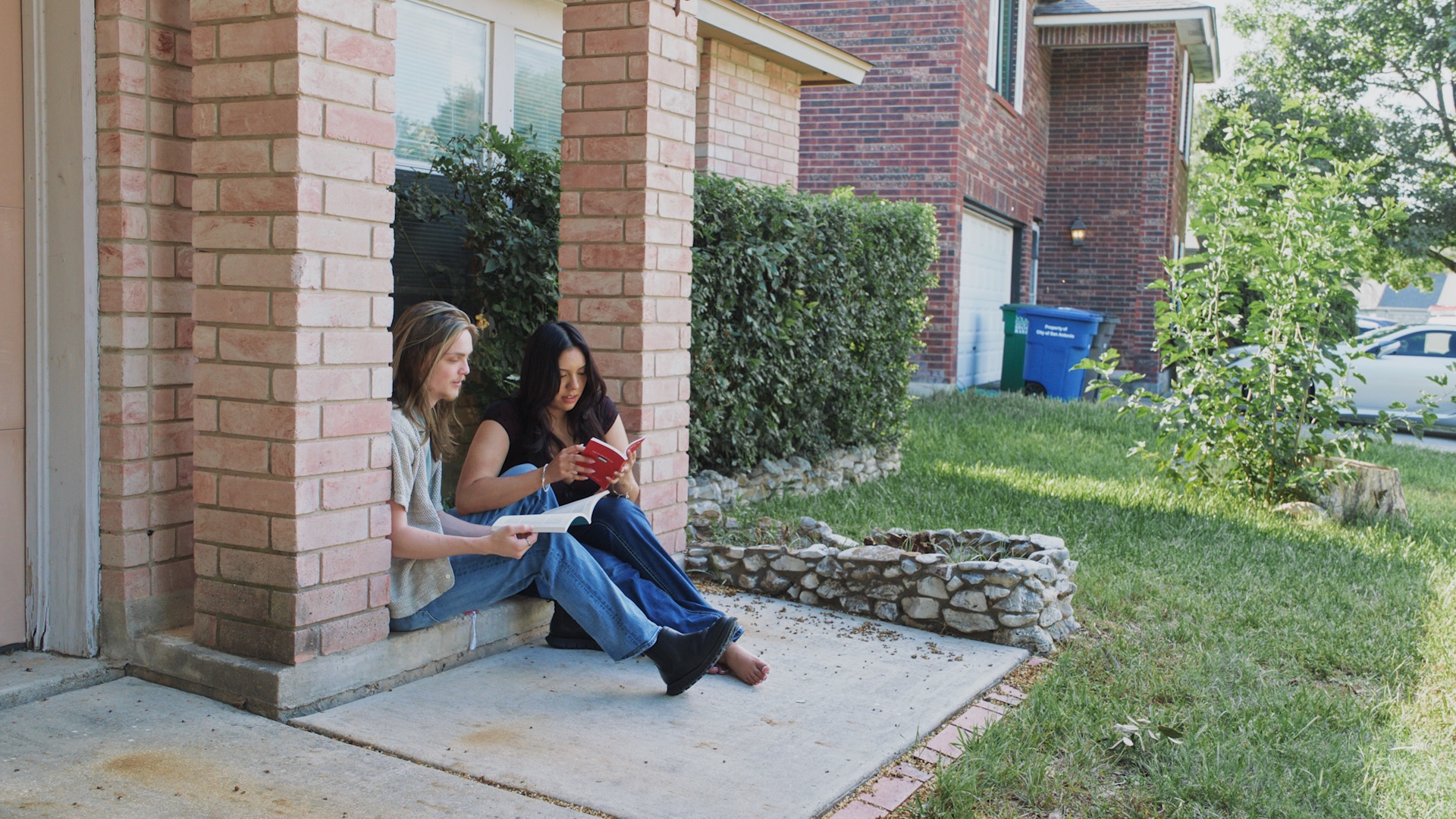
DakotaRei: So we left early in the morning from San Antonio, and it was over a 700-mile drive—more than 11 hours, just one way. That alone was draining. We couldn’t drive and we didn’t have our licenses. So all of that burden was on my mom. Mind you, she was also a full-time student at the time, and she was working. So she took time away from school and work to drive us across state lines to do this. We couldn’t even help her.
We were driving over 700 miles, and I was extremely nauseous. There’s a picture of me laying with my head in Tanner’s lap, asleep. You can just tell all the color is gone from my face, and I look so exhausted.
But I remember while we were driving into New Mexico, there was this big billboard. It was in Spanish, but it said, “We respect every choice.” There was nothing about abortion on it, but in that moment it almost felt like an omen. It felt welcoming, which I’m sure was intentional, but it also felt like a sign. Like, ‘Everything’s going to be okay. You made the right decision. You’re not a failure. There’s nothing wrong with you.’
Even though we left so early, I don’t think we got to Albuquerque until like one or two in the morning. My appointment was at nine the next morning. We pulled up to this sketchy motel because it was all we could afford. I got probably the worst sleep of my life because I was just so anxious. I had zero idea of what to expect. I didn’t feel safe in that motel. I didn’t know this side of town. I just remember waking up thinking, ‘Oh my God, what is going to happen?’
It just felt so far from what I needed in that moment, which was comfort, safety, and familiarity. Instead, I was in a new place with new people, and I had no idea what was going to happen next.
We got maybe a couple hours of sleep before waking up for my appointment. I remember driving to the clinic just dreading what was going to happen. I’m expecting the worst because that’s all I’ve been told here in Texas—that abortion is painful, it’s traumatic, it’s deadly, it’s the worst experience of your life. So I’m just in the car shaking.
My biggest concern was the fear of the pain and not knowing what to expect. The scariest part for me was the vaginal ultrasound. I’d never had any kind of vaginal exam before. So having my very first one be in a state I’d never been to, at a clinic I’d never been to, with doctors I’d never met, while I was pregnant and everything else was happening—it was just so much.
Tanner: A little bit of context—Dakota hadn’t really gone to doctors much before.
DakotaRei: Yeah. I couldn’t afford to go to the doctor. I didn’t go to the dentist. I didn’t go to regular checkups. So it was all very new to me. And then having it all be so intimate was a whole other thing.
Then we got to the clinic, and almost immediately I felt safe.
I remember seeing a sign acknowledging that the clinic was on Indigenous land. There was a gender-neutral bathroom. The person at the front desk asked me my pronouns. There were posters all over the walls saying reproductive health care is for everybody, regardless of race, ability, or gender. It just felt like, ‘Okay, I’m in a safe space.’
It was such a stark contrast to every OB-GYN office I’d been to in Texas, where I always felt like I wasn’t supposed to be there. I walked into that clinic and thought, ‘I’m supposed to be here.’
I remember more specifically that when I walked into the waiting room, I got a Google notification on my phone that one of the other states we had been considering had just passed an abortion ban that day. It was just this weird moment where I thought, ‘Oh my God. There are people like me right now who traveled all that way—probably even someone from my own city—who scraped together all this money, made all these plans, and drove all the way there just to be told, “Sorry, the law passed today. You can’t get an abortion anymore.”’
That was such a big wake-up call because I remember thinking, ‘I would lose it. I can’t imagine coming all that way for it to be for nothing.’
Tanner: Pulling up to the clinic was crazy because there were religious protesters outside yelling things like, “You’re a murderer!” And, “Go back to Texas!” There were also counterprotesters blasting heavy metal music to drown them out. I’m glad they were trying to help, but it was still really loud and really stressful.
DakotaRei: It was all so overwhelming. The screaming, the metal music, the protesters, and the counterprotesters. You’re just there trying to keep it all together.
Tanner: Yeah. Up until that point, I hadn’t really been around any kind of activism. So all of that tension was completely new to me. It was really jarring. Then we walked into the clinic, and there were at least a dozen other people from Texas who had either driven or flown in for care. It was just a really surreal situation to be in.
DakotaRei: Every single person in that waiting room except for one was a Texan there for an abortion. The only person who wasn’t there for an abortion was a New Mexico native who was just refilling her birth control prescription. And everyone there ranged in age from 15 to, like, 40-something.
I remember sitting in the waiting room next to this girl who was also 17 years old, and we were just talking about our experiences and how we got there. She was like, “Yeah, I’m from Dallas. I traveled here alone. I flew here alone, and I can’t afford a hotel. So the second I’m cleared to leave this waiting room, I’m catching my flight back to Dallas.”
That was just insane to me because I already recognized how privileged and fortunate I was to be able to make that trip. But I hadn’t even thought about the fact that I could’ve had to make it alone. I could’ve had to get on a flight, which I’d only done once before. I could’ve had to do it without my partner or my mom, and navigate this new place by myself.
This girl was 17, she came here alone, and she had no time to process it, relax, collect herself, or decompress. She had to catch that flight or she was stuck there. That was honestly gut-wrenching.
Tanner: It was also my first time ever leaving Texas. I’d barely even left San Antonio before that, so it was a lot to process.
DakotaRei: It was so much to process.
Tanner: It was stressful, but at the same time I was kind of in awe because I’d never been to New Mexico before. The mountains were beautiful, and I remember thinking how pretty everything was. It was this weird juxtaposition between seeing this beautiful place and dealing with all the stress of trying to get Dakota the care she needed. I wish my first trip out of Texas could’ve been under different circumstances. I wish I’d had the chance to actually enjoy it.
DakotaRei: I remember going into the room where I was going to have my abortion, and they took my blood pressure. The nurse asked, “Do you normally have high blood pressure?” I said, “Never in my life.” And she was like, “Okay, because it’s alarmingly high right now.”
They gave me some anxiety medication, and almost immediately my blood pressure dropped because I was just so stressed.
But everyone was so kind. They dimmed the lights and asked me what music I wanted to listen to. I remember saying, “Just put on some royalty-free spa music.” So they did. A nurse came over and held my hand, and I remember thinking, ‘Why do I feel so safe right now?’
I wasn’t able to get on birth control until after my abortion, when it was finally offered to me for free. That was kind of a wake-up call. I realized, ‘Oh, this is how health care can and should be.’
And even afterwards, after I got my abortion, I remember we went to walk around the Sandia Mountains. I was having fun. I was enjoying spending time with my mom and Tanner and just taking in the gorgeous scenery.
I remember stopping for a second and thinking, ‘Should I feel bad? Should I feel guilty?’ But all I felt was relief.
It felt like this weight had been lifted off of me. It was like I could breathe for the first time in over a month. That was what made me realize there was nothing negative about my abortion.
DakotaRei: New Mexico is where my dad’s from, and it’s where my tribe’s reservation is, so I’ve always felt a really strong connection to the state. I just remember looking around and feeling like, ‘This is where I’m supposed to be. Everything is okay now.’
It felt like this weight had been lifted off of me. It was like I could breathe for the first time in over a month.
That was what made me realize there was nothing negative about my abortion. The most difficult and heartbreaking part was that I had to travel, that I had to scrape together all these resources, and that I had to carry the guilt and shame my state put on me.
But my experience of the abortion itself, and the support that came out of the dark to help me and help me navigate that experience, reiterated why I wanted to tell my story. It was such a beautiful experience, which I’d never heard anyone say before.
I remember on the drive back from New Mexico to San Antonio, it was like everything finally caught up with me. I just started crying in the car because I’d spent the last month holding everything together. It had been, ‘Go, go, go. I have to figure this out. I have to get the abortion. I have to just hold everything together until we’re past that point.’
And then once I was there, it was kind of like I snapped. I remember thinking, ‘That was a lot for a 17-year-old to handle.’ Being in pain, the cramping, being exhausted, and just wanting to go home, it was a lot. But it was also cathartic.
Tanner: It was a huge relief. A weight taken off my shoulders, our shoulders collectively.
The ride back was a lot more chill. It wasn’t nearly as tense. After seeing how well her procedure went, how much support she got at the clinic, and just everything we’d experienced in New Mexico, I grew to love the state so much.
Having a child would’ve ruined our lives. And as much as it would’ve affected us, we also wouldn’t have been able to give that child a good life. We were in no position to raise a child.
DakotaRei: Abortion saved my life. Because I had that abortion, I was able to get an education. I was able to find myself and become the most authentic, confident version of myself. I found my voice, I found my space, and I found my people.
I genuinely think that not getting that abortion would’ve killed me.
If you or someone you know is struggling, help is available.
988 Suicide & Crisis Lifeline: Call or text 988 for free, confidential support, available 24/7.
Crisis Text Line: Text HOME to 741741 to connect with a crisis counselor, available 24/7.
If this happened to you or someone you love, contact Abortion in America or reach out to our team directly at Amplify Legal.
explore more stories from abortion in america
Texas’ abortion ban reshaped their junior year of high school

An IVF pregnancy, a medical emergency, and no immediate care under Georgia’s abortion ban