He never thought abortion would affect his family. Then his wife’s pregnancy turned fatal.
Synopsis
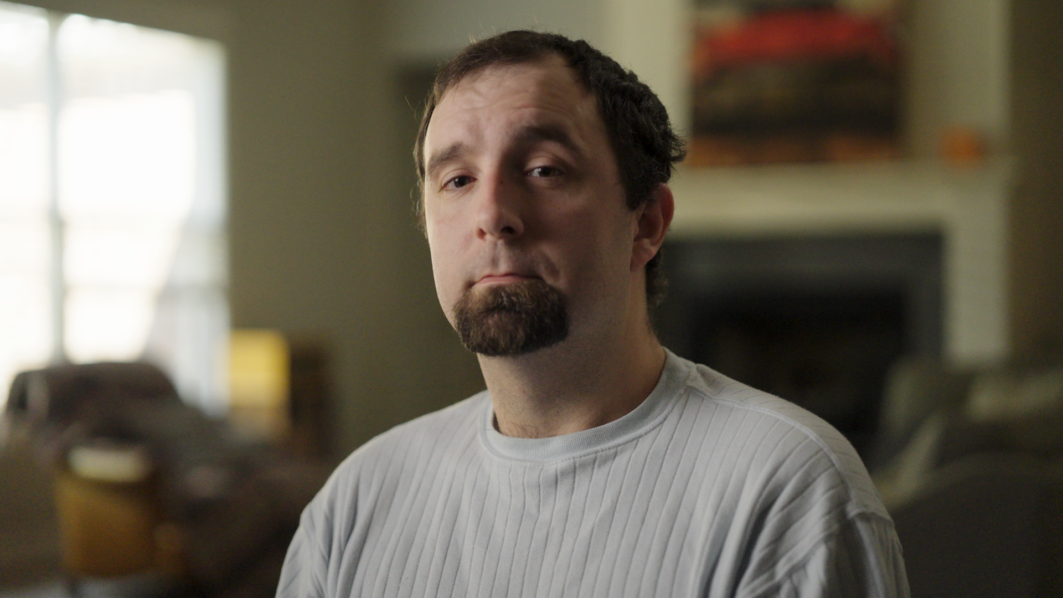
Thomas Stovall grew up in a family of Southern Baptists, believing abortion was wrong. Then his then-wife Chelsea suffered a pregnancy complication that meant their child wouldn’t survive. Just weeks after Arkansas’ abortion ban took effect, the father of two found himself making a decision he never imagined facing. Chelsea is now suing the state of Arkansas in the first case filed by Amplify Legal, the litigation arm of Abortion in America.
Thomas spoke with Abortion in America about traveling 400 miles to Illinois so his wife could get care and how his experience reshaped his views on faith, fatherhood, and abortion.
I grew up believing abortion was wrong, period. Flat out. I was shaking when I was faced with that choice.
Thomas: I always wanted to be a dad, always wanted to be a husband, and always wanted to have kids. Being a dad is the most rewarding part of my life.
We got pregnant with our third one. I still remember it to this day. We walked in, got checked in. The ultrasound lady’s all happy, giddy, doing the ultrasound.
Then she went eerie quiet.
She darn near quit talking.
Before we knew it, they were coming back in, telling us our daughter had a fetal anomaly. No diaphragm. It’s non-existent. A hole in her chest. All her organs and heart are floating around freely.
The one thing I can remember is Chelsea’s scream.
So I sat there and listened. I looked the doctor straight in the eyes and said, “Don’t sugarcoat it. Tell me how it is, Doc.”
At this point, they brought in a specialist.
Editor’s note: Thomas and Chelsea learned their daughter had a congenital diaphragmatic hernia, which specialists said she would not survive. Because Arkansas’ abortion ban had gone into effect just one month earlier, their medical team told the family they could no longer provide the abortion Chelsea needed. They had two options left: continue the pregnancy despite the risks to Chelsea’s health, or travel out of state for care.
It was pretty clear that our daughter wasn’t going to live.
And if she did, the amount of surgery she would’ve had to go through in her life, I wouldn’t wish that on my enemy. I definitely would not want my daughter to go through that.
That’s when reality sunk in, that we had to make a choice.
That’s when I learned about Roe v. Wade and abortion. It opened my eyes, needless to say.
I grew up what they would classify as Southern Baptist. Fire and brimstone. We did not talk about abortion. I heard it maybe once growing up, from a preacher saying, “Abortion is wrong.” That was all the clarity I got on abortion.
When Roe v. Wade overturned, I never even knew it existed. I had to do research. It didn’t become real until it happened to us.
I grew up believing abortion was wrong, period. Flat out. I was shaking when I was faced with that choice.
When you grow up a certain way, believing that abortion is wrong, and then you’re faced with the reality of your situation, it’s hard. It’s not a decision I made lightly. I had a crisis of religion.
I didn’t know what I believed in, who I believed in, and I don’t know that I really do these days.
But what I do believe is the American people should have a choice when it comes to their health care. It literally is your body. If you’re an adult, you should be able to decide what to do with your body. Simple. Nobody else should be able to tell you what to do with it.
Editor’s note: Once they made their decision, Thomas and Chelsea researched to find where they could access abortion care. Because Arkansas is surrounded by states with abortion bans—including Louisiana, Mississippi, Missouri, Oklahoma, and Tennessee—the closest appointment they could find was in Illinois. They were forced to drive 400 miles for an abortion.
Our doctor delivered our other two babies. She was phenomenal. Caring. Whether it was an abortion or an early delivery, I wanted that doctor to be the one doing it, because I trusted her with my child’s life. I trusted her with my wife’s life.
The fact that I had to go halfway across the country, to some random doctor I’d never met a day in my life, was terrifying. I didn’t know what to expect.
First, we had to find child care for our two kids. Luckily, the grandparents stepped in right away. “We’re good. We’ll watch them while you’re gone.” Okay. First problem solved.
The second problem: Does insurance cover it? No.
Everything had to come out of pocket. It drained our life savings. We basically started over from zero.
Then there was the drive. On GPS, it’s about 5.5 hours, but gas and food turns the trip into a six-hour drive.
The day at the clinic, my eyes definitely opened.
If we’d been able to do it in our home state, I would’ve at least had family nearby. Somebody could’ve sat with me. We could’ve talked about literally anything else on the planet while we waited.
Instead, I was alone.
My wife was alone.
I felt like my role as a father was ripped out from under me. My role as the protector of my family was ripped out from under me. Like, “No—you don’t get to be part of this.”
I wanted the child too.
I felt like my role as a father was ripped out from under me. My role as the protector of my family was ripped out from under me.
The choice is the parents’, not some lawmaker with a law degree sitting in an office.
Sorry, but if you don’t have a medical degree, you shouldn’t be making medical laws. That’s just my personal opinion. And honestly, I think most Americans agree with that.
You’re not going to ask a mechanic to perform surgery on you just because they’re good with cars. You’ll take your car to them because that’s what they’re trained to do.
So why are lawmakers making medical decisions?
It’s ludicrous.
Even my grandmother, who is probably the most religious person in our family, understood.
I could call her right now and she still wouldn’t be angry about it. She told me, “I understand why you did it. I don’t blame you. I think you did the right thing.”
Did I ever for once think it was the wrong decision?
No.
I don’t.
I made the best decision out of the best choices I had available.
I’m not ashamed to say it: I see a therapist. I’m on medicine. I’m a United States veteran, and you don’t hear us saying that out loud.
It literally destroyed me. Destroyed who I was, what I was taught.”
But I hope if there’s one thing people take away from this, it’s this: if you’ve been through something like this, don’t wait until it’s too late to get help.
Get help.
There’s no shame in it.
Because losing a child—there’s nothing that compares to it. It literally destroyed me. Destroyed who I was, what I was taught.
And when I finally found myself, I didn’t recognize who I saw.
It was not the same person that grew up in that church. I was angry. Mean. Broke down.
That’s just who I was.
I made sure everybody else got help first. Everybody else got taken care of. But as men in this society, we’re taught to hold in your emotions. Don’t cry.
I was like that, I was hard-core. I didn’t show emotion to anybody.
I was numb to the point where I couldn’t even feel my kids’ love, because I had locked all my emotions away that deep. At some point you will lock that away too. Even if you’re not trying to, you will.
Your subconscious is your worst nightmare. It can make or break you.
That’s why men need to step up. Get help. Change the law. Whatever the case may be. Men need to stand up instead of sitting on our butts.
It’s one of the most painful things I’ve ever been through.
But it was also the most powerful, because it changed me in ways I never saw coming.
If this happened to you or someone you love, contact Abortion in America or reach out to our team directly at Amplify Legal.
explore more stories from abortion in america
Woman said she went into sepsis before she could get lifesaving abortion care in Texas
She thought she found an abortion clinic. It was a crisis pregnancy center.