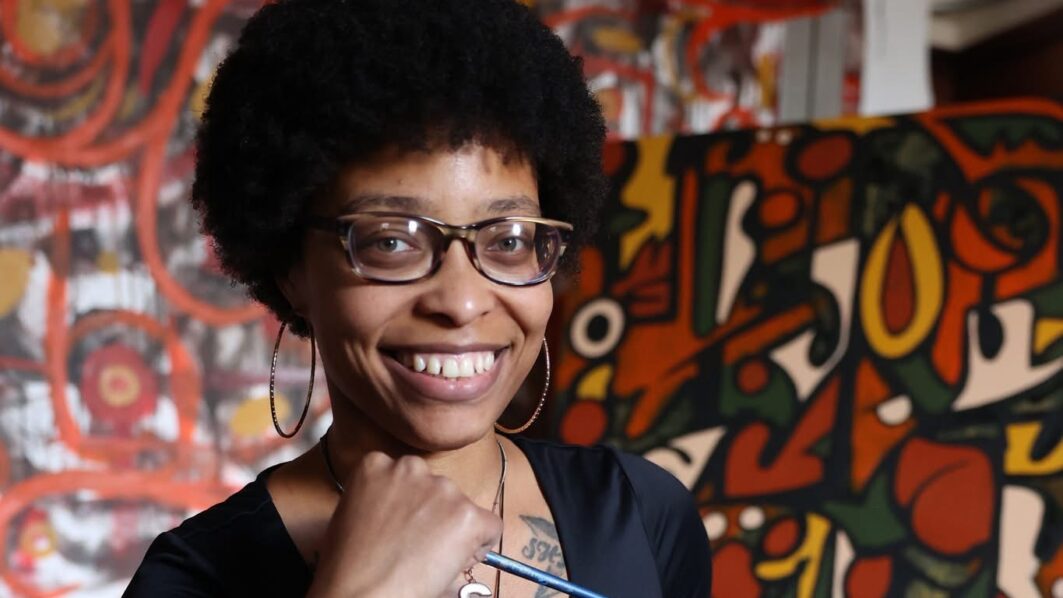
Kishaya Holloway is an artist in Arkansas. She never questioned her decision to have an abortion, only the barriers that made it difficult to access care.
Synopsis
Kishaya Holloway has known for a long time that she does not want children. When she got pregnant in early 2026, she felt confident in her decision to have an abortion.
Because of Arkansas’ abortion bans, Kishaya could not get the care she needed in her home state. As she looked into abortion options in surrounding states, she was stunned by how expensive it would be and how few and far between appointments were. After bad weather delayed her trip, she finally made the four-and-a-half-hour trip to Kansas and back in a single day, putting the cost on a credit card.
After her abortion, as Kishaya explained, she felt only relief. She has never questioned her decision, only the barriers that made it so hard to get the healthcare she needed.
Kishaya now joins Waldorf v. Arkansas, the first case filed by Amplify Legal, the litigation arm of Abortion in America. The following passage is an excerpt from her lawsuit.
Kishaya is a working artist. She has worked with or been around children most of her adult life, including teaching art to kids. But Kishaya came to the realization when she was in her early twenties that she did not want to have any children of her own. Pregnancy and child-rearing is not something Kishaya wants for her life. As she explains: “Being an artist is about birthing new creative ideas. None of my creative ideas involve birthing children.”
When Kishaya’s period was late at the end of January 2026, she was not initially concerned. But then, when an at-home pregnancy test came up positive, she was shocked. She had never even had a scare before. She immediately knew she wanted an abortion and quickly began to do research on her options. Living in a state with an abortion ban made her feel both angry and sad: “It makes me feel like I am just being pressured into a way of life that does not align with my values and that impedes on my autonomy and my belief. I should be able to make decisions for myself.”
Kishaya knew abortion was banned in Arkansas, but she quickly realized that abortion was also banned in most of the bordering states. She began calling clinics in Colorado, Illinois, and Kansas. She talked to a clinic in Kansas but learned it did not have open appointments until mid-March. Another clinic in Illinois had a few appointments in late February, so she took one just in case while continuing to call around for immediate solutions. Some clinics asked for a non-refundable $200 deposit, which Kishaya did not have readily available. Eventually, she found a different clinic in Kansas with openings and made an appointment.
Being an artist is about birthing new creative ideas. None of my creative ideas involve birthing children.
After speaking with clinic staff and learning more about her options for care, Kishaya decided on a procedural abortion. She did not feel comfortable with medication abortion, as she dislikes taking medication in general. She also wanted the procedure to be over quickly instead of proceeding over multiple days, as is typically the case with medication.
Kishaya and her partner then began to work out the finances. They realized they would need to do the entire trip in one day because they could not afford to stay over in a hotel room. They would drive the four and a half hours to Kansas, Kishaya would have her procedure, then they would turn around and drive home. The clinic quoted the price of the procedure at around $775. Because they struggle to make ends meet as is, Kishaya asked about financial assistance. Through the assistance of various abortion funds, the clinic was able to bring the price down to $375. Kishaya asked if there was anything they could do to help with the price of gas, and the clinic sent her to a different abortion fund that was able to contribute $100. Kishaya put the remainder, $275, on a credit card: she had no other choice.
Along the way, she thought about how before Roe was overturned, she could have gotten everything she needed for an abortion in her community. But things were so different now. Still, with a plan in place, Kishaya felt relieved.
Then, a series of horrible winter storms hit Arkansas, making it impossible to get to Kansas. Kishaya had to reschedule her appointment several times because of the snow and ice. “That took me down mentally. This is when it felt heavy.” Not because she was questioning her decision but because it felt like there were so many obstacles she could not control. As the waiting dragged on, Kishaya began researching clinics with later gestational cutoffs for an abortion, just in case her procedure was delayed further.
I felt like my body wasn’t mine. I didn’t feel like me.
By this point, the symptoms of pregnancy were starting to hit Kishaya. She was horribly nauseous and had to force herself to eat. “It felt like I was feeding someone else. I felt like my body wasn’t mine. I didn’t feel like me.” Kishaya knew if she had to continue the pregnancy, even if she chose adoption, the experience would make her resentful. “I worried the resentment would transfer to the child.” Kishaya knew abortion was the right decision for her. The decision to terminate the pregnancy was not a heavy one for Kishaya. But the experience of being pregnant was.
The decision to terminate the pregnancy was not a heavy one for Kishaya. But the experience of being pregnant was.
Finally, early on February 6, when Kishaya was 9 weeks pregnant, she and her partner started the long drive to Kansas. They arrived at the clinic around 9 a.m. There was one protester outside the clinic, but they got inside quickly and the process was simple and smooth. The staff was gentle and kind, confirming with Kishaya that she was certain of her decision and giving her all the information about what to expect from the procedure as well as after-care. Kishaya received her abortion without incident, and after the clinic cleared her to leave, she and her partner made the long drive home.
The morning after her procedure, Kishaya woke up, relieved. “I came back to life feeling like myself. My body was back to how I remembered it. I just felt a huge, huge relief, just a weight off my shoulders.” Kishaya has never questioned her decision. The only thing she regrets is that Arkansas law made the experience so much more stressful, difficult, and expensive.
If this happened to you or someone you love, contact Abortion in America or reach out directly to our team at Amplify Legal.
explore more stories from abortion in america

Leitaea Lowrimore went to three ERs in two states in the middle of a medical crisis. No one would treat her.
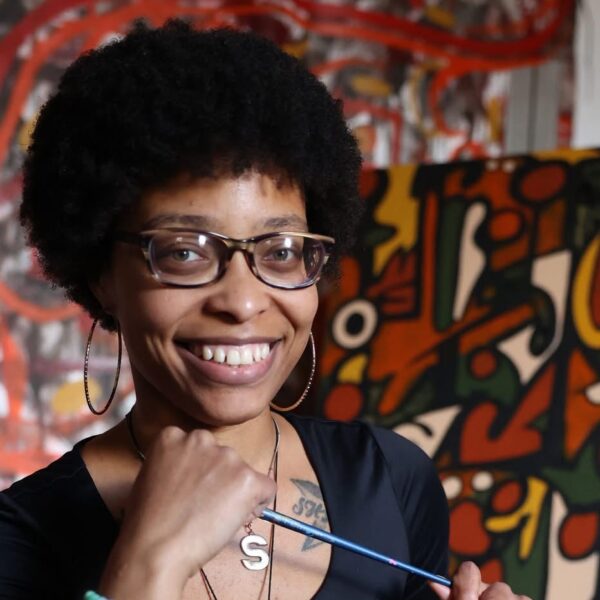
Kishaya Holloway is an artist in Arkansas. She never questioned her decision to have an abortion, only the barriers that made it difficult to access care.