“A huge lack of trust of the medical community”: An OB/GYN and medical student discuss the consequences of Louisiana’s abortion ban for the field of health care
For doctors and medical students in states with abortion bans, the overturning of Roe v. Wade has reshaped the way they practice medicine and think about their careers.
For Dr. Nicole Freehill, an OB/GYN in Louisiana, trying to navigate vague laws written by politicians, rather than health care professionals, has had a chilling effect on her field, leaving doctors afraid they will lose their licenses and face fines and prison time simply for caring for their patients.
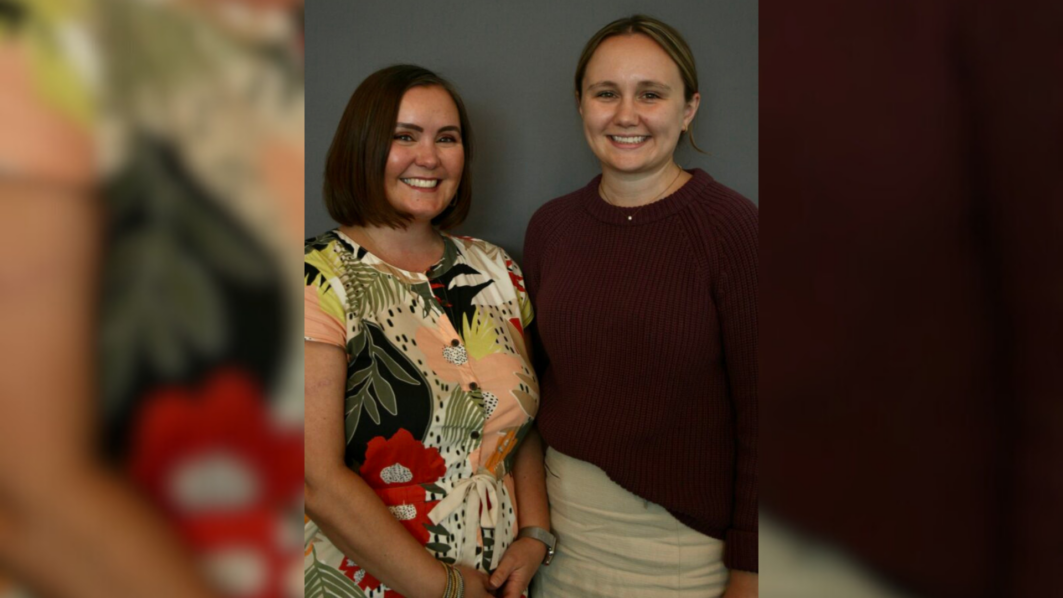
Dr. Freehill’s mentee, Haley Beavers Khoury, is a medical student whose entire medical education has taken place post-Roe. Together, the two discussed the impact abortion bans like Louisiana’s have not only on patient care, but on training and career opportunities for a generation of doctors. As outspoken advocates for access to reproductive health care, both described the risks they have taken to publicly stand up for their patients and the field of medicine.
“I want to absolutely, no matter what I do, incorporate reproductive health and … sexual health and gender affirming care … into my practice,” said Haley. “But will I be able to do that? And I think it’s just very odd to be building a career with this big, kind of, rain cloud looming over me. It’s really scary.”
Dr. Freehill and Haley’s conversation was recorded by StoryCorps Studios, part of Abortion in America’s collection of interviews with people in Louisiana about the ways in which the state’s abortion ban has affected their lives.
In our exam rooms, in the delivery rooms, we have our own code that we operate under: First, do no harm. These laws put me into a situation where I am doing harm.
Audio Transcript
Haley Beavers Khory: Why did you decide to become an OB/GYN?
Dr. Nicole Freehill: I went into my third year of medical school, kind of open-minded, but my second rotation was OB/GYN. And at the beginning, I said, “Oh, it’ll be fun. I’ll get to, you know, deliver a baby.” So, I got gowned up in my gown and my boots, and my resident said, “Look, just put your hands on top of mine. I’ll guide you. We’ll do it together.”
And seeing the beginning of the head coming out of the vagina, then it gets bigger and bigger and bigger and you’re like, “Oh my gosh, there’s a sea monster in there.” And then all of a sudden, the baby was out. And it was just so amazing. I was just shaking. And I came home and told my husband, and he was like, “Oh my God, I saw the excitement on your face. I knew that day that you were going to be an OB/GYN.”
I absolutely love what I do. That is what has kept me going through some really difficult call schedules, some really difficult times, especially recently.
Haley Beavers Khory: So, speaking of hard things, when you found out that Roe fell, what did that look like for you?
Dr. Nicole Freehill: The criminalization piece of this trigger ban has been the most hard pill to swallow. In our clinics, in our exam rooms, in the delivery rooms, we have our own code that we operate under: “First, do no harm.” These laws put me into a situation where I am doing harm.
Haley Beavers Khory: Yes.
Dr. Nicole Freehill: And, you know, thankfully I was able to find a reproductive health rights lawyer who walked me through what the bill means, broke it down, you know, took out the jargon. But there are a lot of physicians who are like, “Oh, I, I’m scared. I don’t know these laws. You need to leave. I can’t treat you.” And patients who are being sent away from ER after ER, soaking through pads, blood running down their legs. That is just a travesty. You can still treat that miscarriage. You can treat that patient, because the patient should come first. The mother should come first, always.
Haley Beavers Khory: Mm-hmm.
Dr. Nicole Freehill: So, your entire medical education has been in a post-Roe era. How has that been on you as a student?
Haley Beavers Khory: I want to absolutely, no matter what I do, incorporate reproductive health and, like, sexual health, and gender-affirming care, and all these things into my practice. But will I be able to do that? And I think that it’s just very odd to be building a career with this big rain cloud looming over me. It’s really scary.
Dr. Nicole Freehill: Yeah, it’s hard. I’ve put myself out there a lot, so I’m fearful of my safety, of my family’s safety. My husband and I had a very long discussion for several days about should I keep doing this work? Should I stay in Louisiana? And I just knew that I couldn’t leave and abandon all of my family, and all of my friends, and all of my patients, and colleagues and everybody.
Haley Beavers Khory: Yeah. I’m learning how to survive down here and so, I am gonna be so well-equipped to deal with any nonsense that comes my way (Right.), because I am dealing with it daily.
Dr. Nicole Freehill: I just want to tell you that I’m super proud of you. (Thank you!) And that fire in your belly, and that gumption, and that drive is what we need to keep things going, hopefully move that needle in the right direction, even if it’s just a nudge.
She thought she found an abortion clinic. It was a crisis pregnancy center.
The abortion she needed made room for the family she wanted.