Abortion in America
A volunteer pilot is helping patients get to care they can’t access at home
Synopsis
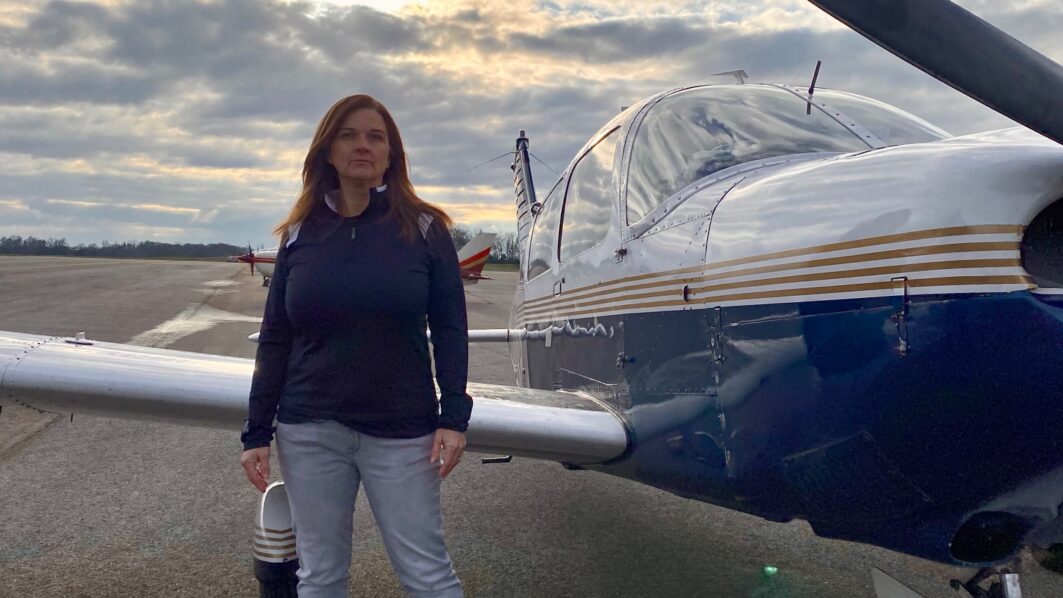
Kim Farwick signed up as a volunteer pilot with Elevated Access—a nonprofit that enables people to access abortion care via no-cost, private flights—the day the decision to overturn Roe v. Wade was leaked. Having gone through the experience of having an abortion before, she now uses her pilot’s license to help others travel for care.
Kim spoke with Abortion in America in New Orleans, Louisiana about how her own story has shaped her time with the volunteer pilot network, and why she feels it’s important to share more of these stories.
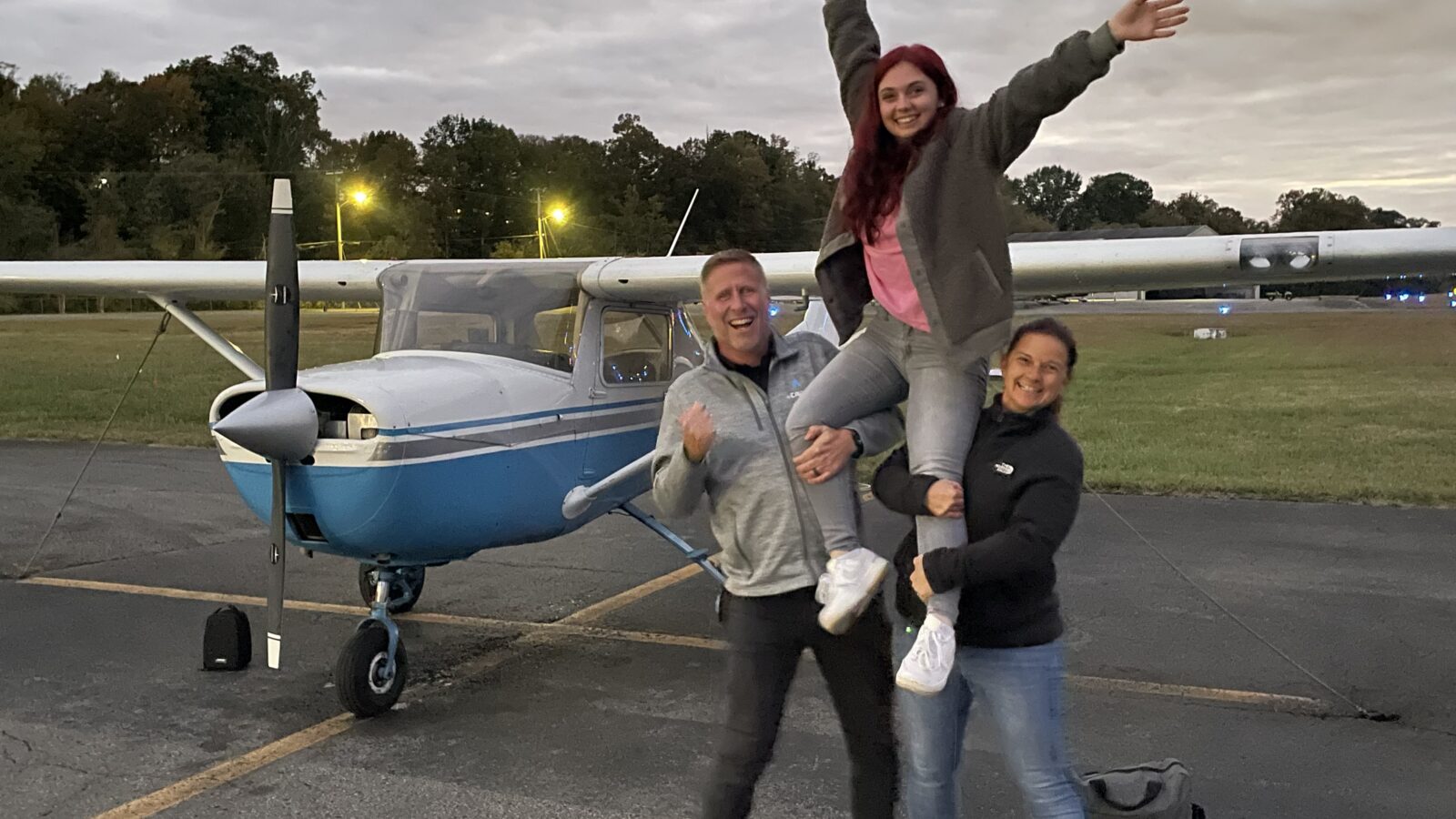
Kim: I signed up for Elevated Access in May 2022, the day the decision to overturn Roe v. Wade was leaked. I kept thinking about all the women who might have had appointments the next day. So I checked the requirements—you needed 200 flight hours—and I had 200.8. I was in.
I live in Tennessee, where we had abortion access shut down overnight after the trigger ban. It’s one of the most restrictive states in the country. As someone who’s been in a position where I needed an abortion, I had to do something with my hands. I’d just gotten my pilot’s license a couple of years earlier, and this felt like a way to help.
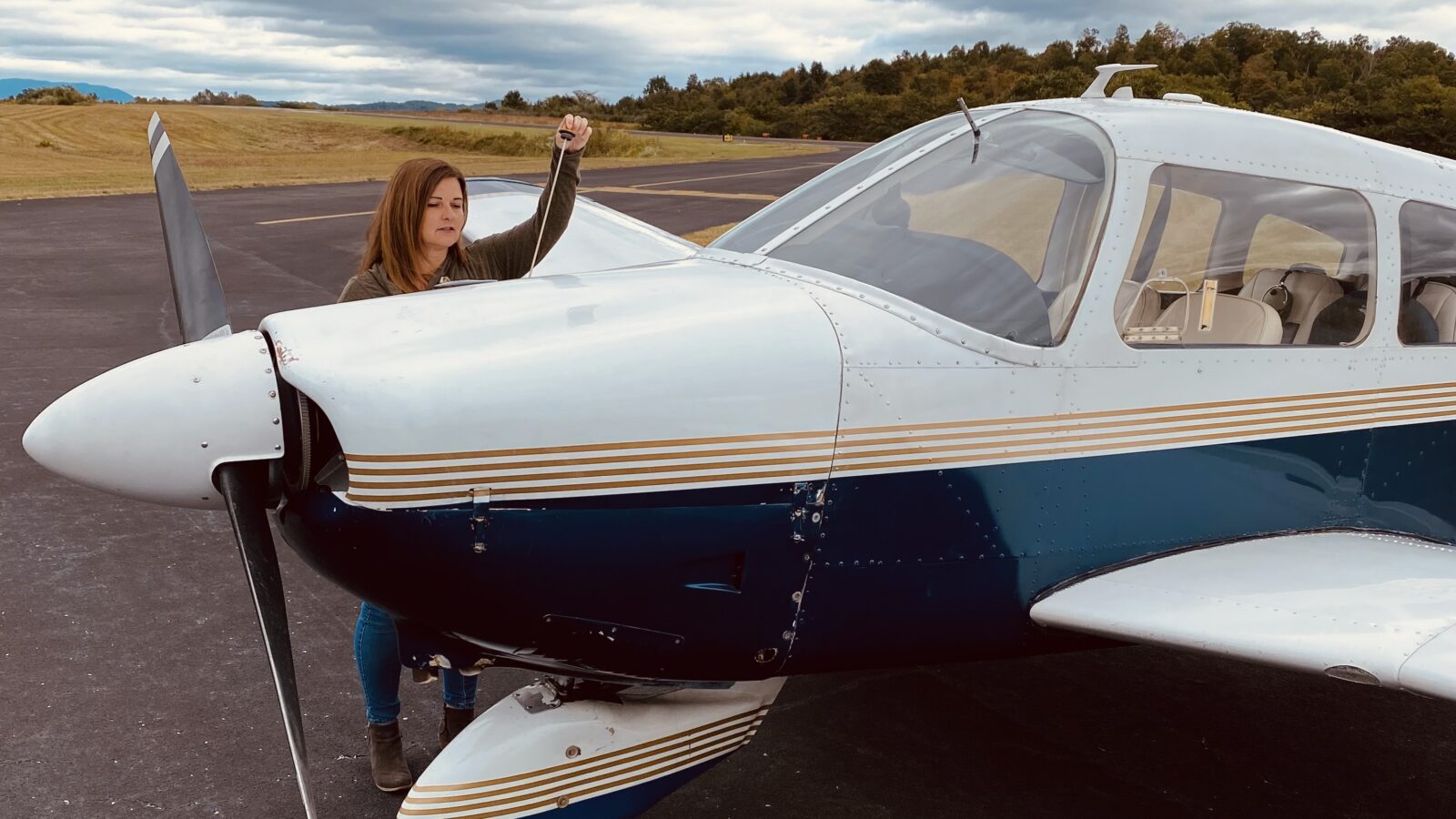
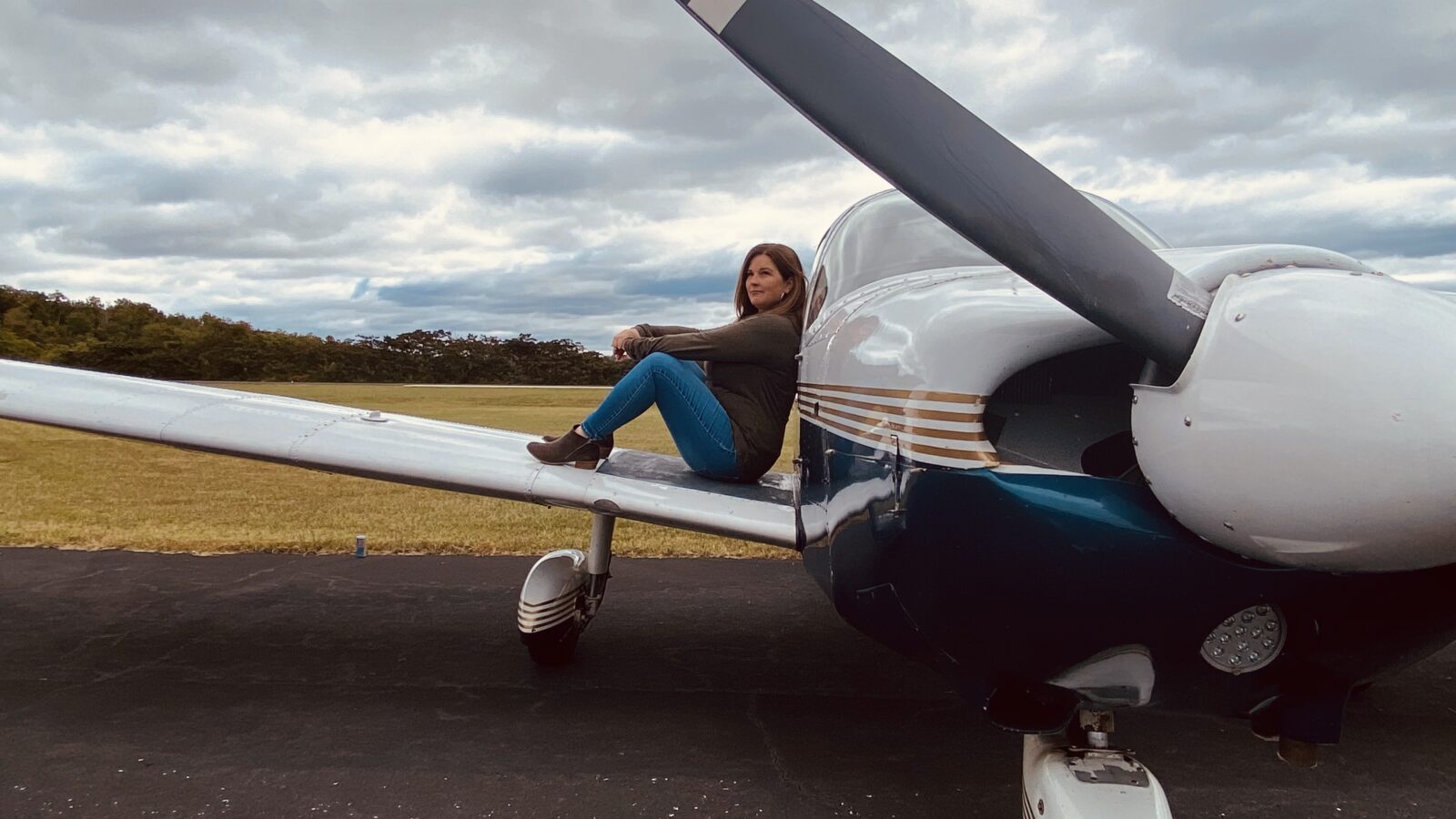
We volunteer our own aircrafts or rent planes, and we cover all the costs when we fly patients, so there’s no cost to the person traveling. We pick people up near where they live and take them to wherever they can get care. I fly all over the Southeast.
They made me feel so cared for and like they just wanted to help me. That is what I try to recreate for people who I’m transporting.
Eleven years ago, when I had my own abortion, I felt a lot of shame that I don’t want other people to feel. I hate saying that, but I’m going to be honest. I didn’t share it with hardly anyone. The person who drove me was the only one who knew that I was having an abortion. More people probably would have shown up for me if I had told them. My family’s very supportive, but I was too afraid to tell anyone. Which is why I think it’s so important that I speak up and that we all speak up now.
I was a single parent at the time. My daughter was in middle school, my son was in elementary school. They thought I was at work. Looking back, I was the only one who understood what I was going through.
There’s a misconception that abortion only affects the person having it. In my case, it affected my kids’ lives too. I was a single mom starting a new career.
So eleven years later, I’ve moved up in that company and I can provide a really good life for my kids now, the kind of life that I want to provide for them. I don’t know that I could have done that without my abortion. I don’t know that I would have progressed as in my career. I don’t know that I would have been as present, and I definitely wouldn’t have met my husband. I don’t know.
The day of my abortion, there were often protesters outside the clinic in Tennessee, but fortunately for me not that day. It was an average procedure, to be honest. I found out I was pregnant very early on, and I had a surgical abortion. In Tennessee at that point, you had to go to two appointments. When I went the first time, they were surprised I even knew that I was pregnant.
There was a nurse who held my hand. Her name was Becky. She was giving me updates and talked me through everything. She told me, “I’ve been right where you are.” The doctor said the same thing, that she had been there too, twice. And suddenly, I wasn’t alone. All three of us in that room had been through it.
And that’s the thing about sharing your story. Once you do share, most of the time somebody else is going to say, “I also had an abortion.” They made me feel so cared for and like they just wanted to help me. That is what I try to recreate for people who I’m transporting.
I hate that they have to travel, but I want them to feel like they’re not alone. We’re going to get you there and it’s going to be okay.
I hate that they have to travel, but I want them to feel like they’re not alone. We’re going to get you there and it’s going to be okay.
There are a few people I’ve flown who stay with me. One was a mom around my age, traveling with her two teenagers. I saw my own family in them. She had a boy and a girl just like me. Her kids even reminded me of my kids. They were similar in personality, in the way they dressed, everything.
The same situation I had been in, except I had the luxury that my abortion took place before Roe v. Wade was overturned, so I was able to get care in Tennessee. I just felt so connected to them.
After the flight, she texted me and said, “You have saved my life.” I’ll never forget that.
Another person I flew from South Carolina to Virginia had never flown on a plane before. She met me outside, ready and waiting for me, calling me, “Miss Kim!” When I pulled up my plane, she was so excited to fly. In the middle of something that could have been traumatic, she got to have a fun day and go fly in a small plane. Being able to bring some joy to her meant everything to me.
One of the most impactful flights I’ve done was part of a relay mission, which meant she had to travel across multiple states to get care. She was coming from Texas, so one pilot flew from Arkansas to pick her up and take her to Alabama. I met her there, flew in from Tennessee, and took her the rest of the way to Virginia. She had to travel across seven states to get the care that she needed.
That day, I flew over seven hours. It was the longest I had ever flown without another pilot on board. When I got her where she needed to go and flew back home that night, I looked at my logbook and was astonished.
Being able to support people by flying them has been empowering to me. I’m not afraid to speak up and use my voice for people who either can’t or aren’t comfortable speaking up. I see myself as a caretaker or caregiver for them. So I think it’s important that I do use my voice when I can. I’ve been on the other side when I was afraid to speak up.
When I tell my story, I think about all of the women that I’ve gotten to help and I’ve gotten to transport to get them to the care they need. I think about their lives and I put myself in their place. What would their life look like if they weren’t able to access that care?
explore more stories from abortion in america
Woman said she went into sepsis before she could get lifesaving abortion care in Texas
She thought she found an abortion clinic. It was a crisis pregnancy center.