Abortion in America
One of my twins was dying. Texas wouldn’t let my doctors help me.
Synopsis
Ashley and her husband, Marcus, were pregnant with twins when they found out one of the twins wouldn’t survive. Because of Texas’ abortion ban, they had to leave Houston for an abortion to save Ashley’s and her healthy twin’s lives. Ashley spoke with Abortion in America in their home in Texas about what her family went through under the state’s ban.
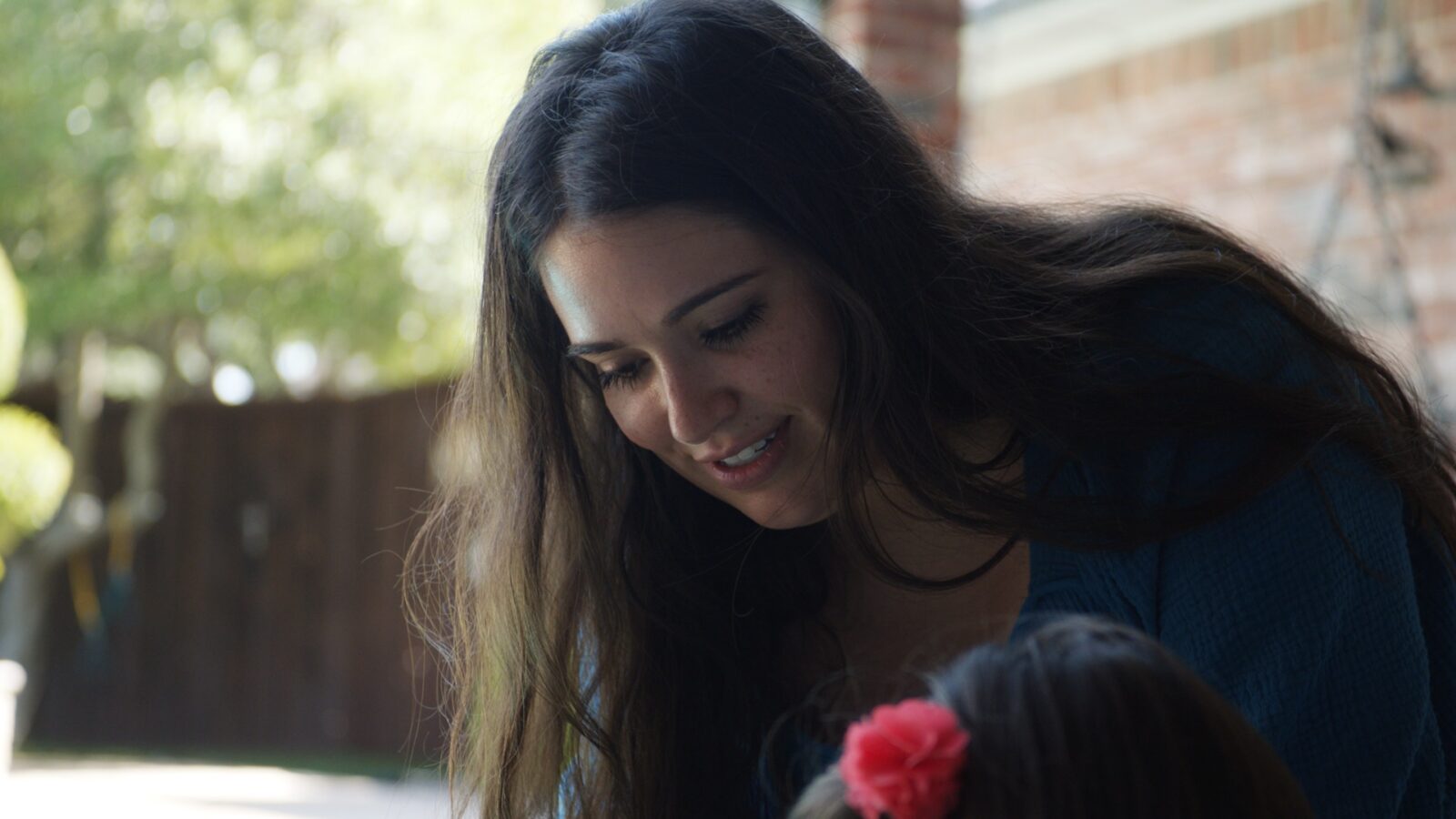
Ashley: At 12 weeks pregnant with twins, I was told that one of my daughters had a fatal condition. I was told that because I was having twins, the risk for everything goes up. Two babies, double the risk.
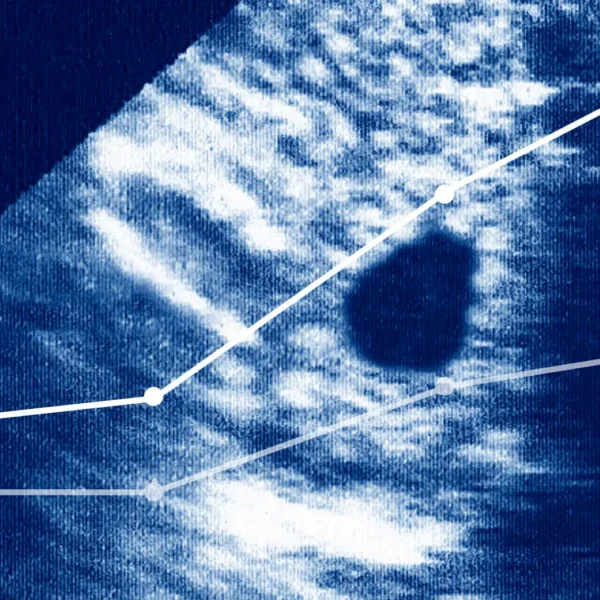
The doctor came in and held out two ultrasound images of the tops of their heads. She said, “This is Twin A, and this is Twin B. We suspect that Twin A has a condition called acrania, where her skull has failed to fuse, leaving the brain tissue open and exposed to the fluid in the sac.”
My first question was, “What can I do?”
Her response was, “It is 100% fatal. There’s a 0% chance of survival.”
The second thing I asked was, “What does this mean for Twin B?”
It was explained to me that if I continued the pregnancy in Texas without any intervention, my viable twin, Twin B, would probably not make it.
As a mother, I felt like the state was telling me that I could not make the safest or best choice—not only for myself, but for my child.
As a mother, I felt like the state was telling me that I could not make the safest or best choice—not only for myself, but for my child.
Editor’s note: Twin A’s skull had not fully developed, causing the brain tissue to be exposed. Under Texas’ abortion ban, a diagnosis like this is not enough to qualify for abortion if there is a chance the pregnancy would make it to term. Despite the fatal diagnosis, Twin A still had cardiac activity, preventing Ashley from accessing abortion care in Texas. Over the next 10 days, Ashley and her husband contacted clinics, hospitals, and specialists across the country before finding a doctor willing to provide an abortion that could save Twin B’s life.
Within those 10 days, we were just left to sit with this information.
What is acrania? We had never heard of it. We didn’t know what it meant.
What we did know was that we would be holding a dead baby in the state of Texas, and we knew we did not want to do that.
At that time I was aware of Texas’ abortion ban, and knowing that we would have to hold a dead or dying baby was enough for me to know that I was going to go out of state and get an abortion.
The thought of holding two dead babies was there, and I thought I was going to lose the entire pregnancy.
So for those 10 days, it became an obsession. We were Googling, calling, and researching anything we could find to learn more about the diagnosis and what it meant—not just for us and our family, but for Twin B, our viable twin.
In the state of Texas, I knew that under the abortion ban I would have to continue the pregnancy, doomed or not.
My husband would take one state and I would take another. We called clinics, hospitals, and IVF clinics because we knew they dealt with multiple pregnancies. We were sobbing on the phone, calling anyone who might be able to give us information.
That’s when we found out about a procedure called a fetal reduction, where doctors reduce the pregnancy from two fetuses to one. If it’s done before 16 weeks, the sooner the better, and the higher the chance of survival for the remaining fetus.
As soon as we learned that, we knew we had to get out of state quickly.
The thought of holding two dead babies was there, and I thought I was going to lose the entire pregnancy.
Within those 10 days of waiting, we found a great maternal-fetal medicine specialist at a university hospital in Colorado. The specialist actually called me himself and had a full consultation with me over the phone.
When I finally got to see my in-state maternal-fetal medicine specialist, we went over the ultrasound again. They used the coded language of a “second opinion out of state” and really mentioned nothing else until we brought it up ourselves. We asked about a fetal reduction.
I remember her saying, “If this were anywhere else, that is something I could do in the office today. Ten minutes, in and out. But since this is Texas, it is still your right to seek a second opinion out of state.”
That really answered the question for us.
One thing she did tell me was, “When you do find a doctor out of state for a second opinion, I need you to call me directly so I can share your medical records. Please don’t call my office or speak to any other staff member here. I really need to protect my staff.”
That was the reality of trying to seek care to save the life of my daughter.
If this were anywhere else, that is something I could do in the office today. Ten minutes, in and out. But since this is Texas, it is still your right to seek a second opinion out of state.
When we got the news, I just went home and cried in bed for the rest of the day.
I had so many texts on my phone asking how the appointment went. It was 12 weeks, so it was the first kind of cute ultrasound picture where they actually look like babies. Everyone was really excited, waiting for me to send over pictures and tell them how it went.
Having to reply back to those messages was tough. Because what do you say?
It’s also really hard because abortion is such a polarizing subject. I feel like people are very firm in their beliefs. It’s something we’re taught to think of as taboo, and the sentiment a lot of the time is that you’re either for it or against it.
But our situation was really complex. There was a part of us that felt the need to take care of other people’s feelings when sharing this news. We knew that if someone didn’t agree with abortion, we were already giving them devastating news. We didn’t want to add salt to the wound.
And we also didn’t want to hear it. We didn’t want to hear, “Maybe you should consider this,” or, “Maybe you should think about that.”
We had already had the conversation ourselves. We were going to make the best decision for our family regardless of what anyone else thought.
It’s weird to be in a situation where your entire world is crumbling and falling apart, but you’re still worried about the feelings of other people and what they’re going to think and how they’ll accept this devastating thing that you have to go through.
But the people who really love you show up and support you.
But everyone we told and explained the situation to met us with nothing but support and love. We actually grew a lot closer to people because it showed us just how supportive our loved ones were.
It was hard to build up to those conversations. We were already devastated and hurting, and we knew we were about to tell people something they might not agree with. Getting to the point of sharing it felt incredibly difficult.
But the love and support we received was amazing. I think not telling people would have only built more resentment on our end.
We were really surprised, and really grateful, to be met with so much support.
Editor’s note: After finding a doctor who would do the procedure, Ashley and her husband, Marcus, left Houston and traveled to Colorado. The trip cost thousands of dollars in last-minute expenses, including flights, a hotel room, a rental car, child care, and out-of-pocket medical costs.
I also didn’t understand why I could fly two hours within the same country and get the care I needed, but I couldn’t get it at home. We’re all U.S. citizens, and yet the care available to me depended on what state I was in.
The flight there was depressing. It was sad.
I knew I was going to say goodbye to a wanted child.
Getting off the airplane and walking into the rental car station, people would ask, “What are you here for? Do you have any fun plans? What kind of adventures are you guys getting into?”
I remember when my husband and I got to the parking garage. We got out of the car to walk into the hotel and just stood there, hugging and crying before we could go inside.
It sucked. It’s not where you want to be during a medical emergency.
You want to be home. You want to be with your doctors. You want to be surrounded by your loved ones.
The doctors at the university hospital were absolutely amazing. They were compassionate, kind, and so sweet. But they weren’t my doctors, and this wasn’t my home.
I also didn’t understand why I could fly two hours within the same country and get the care I needed, but I couldn’t get it at home. We’re all U.S. citizens, and yet the care available to me depended on what state I was in.
It was tough after the procedure, walking back through a hotel lobby full of people while I was crying, standing in an elevator with strangers, and then going to cry in a bed that wasn’t mine.
It wasn’t fun.
It was a private medical emergency that I did not want to share with other people, and yet it felt like it was happening in front of a bunch of strangers.
The night we got home from Colorado, I experienced some leakage of fluid, which was scary because I had flown home that day.
I was able to contact the doctors at the Colorado hospital, and they told me that a little bit of clear fluid was fine. They said to keep an eye on it and see my OB when I got home.
But that night, I had a really painful cramp followed by a rush of blood. It scared me.
I was also terrified to go to a Texas emergency room and try to explain why I was there.
I feel crazy saying that now because, hello, you’re pregnant, you’re bleeding—you go to the doctor, right?
But I was scared. I didn’t want to go, and my husband actually had to convince me to get in the car.
It was around two in the morning. We dropped my son off at my parents’ house, about 20 minutes away, and went to the ER.
I remember trying to explain everything to the doctor, but not really knowing what I should or shouldn’t say. Both my in-state and out-of-state doctors had told me not to say anything, to keep it to myself.
We didn’t even bother using insurance for the out-of-state procedure. Not that it would have covered it, but the hospital was very clear about keeping things private.
Looking at some of the legislation being proposed now, it makes sense. They’re really trying to go after anyone for anything.
Trying to explain to the ER doctors what had happened, while also trying to figure out what I was allowed to say and what I wasn’t allowed to say, was incredibly uncomfortable.
I said, “I just had a fetal reduction. One of my twins was sick.”
At first they were just like, “Sure, sure.”
Then when they realized what I was saying, they both took a step back.
I remember thinking, Am I in trouble? Did I get someone else in trouble?
Instead, they just said, “Okay, we’ll order an ultrasound.”
But the whole interaction felt strange. It was like we weren’t going to talk about it. They were going to check on me, and then I was going to leave.
That was the whole experience. I felt like I was sneaking around and doing something I wasn’t supposed to be doing.
I was also terrified to go to a Texas emergency room and try to explain why I was there. I feel crazy saying that now because, hello, you’re pregnant, you’re bleeding—you go to the doctor, right?
I spent the rest of my pregnancy trying to pretend I wasn’t pregnant. I was terrified that something else would happen, that I would lose the pregnancy, and that my abortion care would be blamed. I would be blamed for going out of state and getting the procedure.
I said no to a baby shower. I waited until the week before she was born to work on the nursery. I didn’t want to acknowledge any of it because I was scared.
Everything about my first pregnancy was ideal. It was magic. It was sunshine. It was smooth. It was perfect. I had been so excited for this pregnancy because we had always imagined having three children.
I could not wait to give birth. Not just for the reasons most mothers do, wanting to finally meet their baby, but because I knew that once she was out, she was no longer part of my pregnant body.
The state didn’t have control over her anymore.
I could make the medical decisions that were best for her. I could protect her.
Her birth was the most relieved I’ve ever felt in my life. I felt victorious in a way. She was safe. We did it.
The experience changed me. Up until that point, motherhood had been nothing but sunshine. It was all the best things combined, and I got to live that every day. This pregnancy really scared me. It shook me in a way I had never experienced before.
Living in Texas under an abortion ban, knowing what I know now, there’s not an ounce of me that would want to be pregnant here again. It simply doesn’t feel like a safe choice.
As a result, our dream of having three children has come to an end. We’re happy with our two children, but that choice was taken from us.
I am incredibly grateful for the family I have. My two children are healthy and happy, and I know how lucky I am.
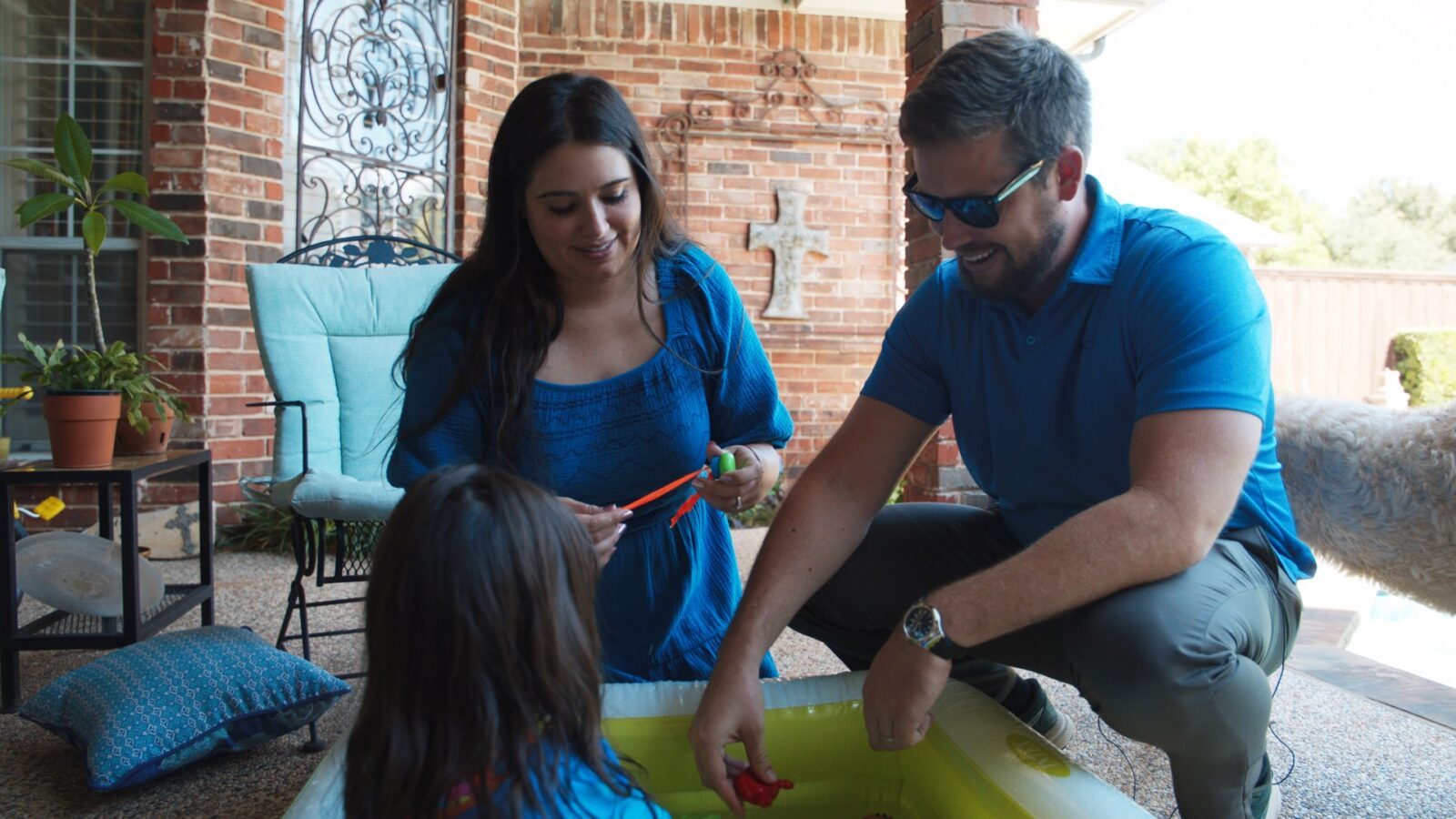
My son is the best big brother. I remember bringing Marley home from the hospital and watching him fuss over her. “Don’t hold her head like that,” he’d say. “Make sure you feed her this.” He took his new job very seriously.
I’m just lucky. I’m lucky that I get to watch them grow up together.
I could not wait to give birth. Not just for the reasons most mothers do, wanting to finally meet their baby, but because I knew that once she was out, she was no longer part of my pregnant body. The state didn’t have control over her anymore.
Knowing what I know now and having experienced what I’ve experienced, I feel like the state sees me and my daughter as nothing more than collateral damage to its agenda.
For me, getting pregnant again no longer feels like a safe choice.
No one thinks they’ll be in a situation like mine, where you need emergency medical care that involves an abortion. No one thinks they’re going to be in that situation until it happens.
And you don’t want to be stuck in that situation when you’re not able to get care.
I think people really need to stop thinking, “It’s not going to happen to me,” and start thinking, “What if it did happen to me? What would be my course of action? What would that mean?” And really think about it that way.
If this happened to you or someone you love, contact Abortion in America or reach out to our team directly at Amplify Legal.
explore more stories from abortion in america
She thought she found an abortion clinic. It was a crisis pregnancy center.
The abortion she needed made room for the family she wanted.