She thought she found an abortion clinic. It was a crisis pregnancy center.
Synopsis
When Jessica Macias needed an abortion in Texas in 2016, she unknowingly walked into a crisis pregnancy center posing as a medical clinic. She describes the tactics used at this anti-abortion institution as “hostile.” She spoke with Abortion in America in Texas about how that experience led her to help others avoid being misled like her and navigate finding care under her state’s abortion ban. The passage below has been edited from the original transcript for length and clarity.
Jessica: Before I became pregnant, I was not aware of crisis pregnancy centers. I assumed that if I wanted an abortion, I could get one very easily.
I was also very anti-abortion in my adolescence, I came from a very Catholic upbringing. I considered myself pro-life, to the point where I even wrote papers about it for school assignments. Eventually, after I left that school, I started to see the world for what it was. I became supportive of people’s choices.
When I got pregnant, it was 2016. Abortion was still legal in Texas.
I knew right away, as soon as I saw that the pregnancy test was positive, that I did not want to be pregnant. I knew that I wasn’t in the right headspace and that I wasn’t in the right place to raise a child.
I knew in my head, my decision was made. I wanted an abortion. Period.
So I ended up googling abortion clinics near me, and I found a lot of clinics—or so I thought—that sounded very legitimate. I clicked on the website for Thrive Women’s Clinic.
They said they offered free pregnancy testing because, at the time, I knew I needed to get my pregnancy confirmed in order to get an abortion in Texas.
We got there, and it seemed like a regular clinic setting.
Editor’s note: When Jessica sought an abortion in 2016, abortion was still legal in Texas, though patients were required to receive state-mandated counseling, undergo an ultrasound, and wait before obtaining the procedure. Patients seeking abortion care often found themselves at crisis pregnancy centers, which are anti-abortion, mostly religiously-affiliated, organizations that present themselves as medical clinics. They lack patient-centered care, and their deceptive practices often violate principles of medical ethics, despite purporting to dispense medical advice. In 2016, crisis pregnancy centers already outnumbered abortion clinics in Texas. Since the state banned nearly all abortions in 2022, lawmakers have directed millions of taxpayer dollars to these anti-abortion centers.
I knew in my head, my decision was made. I wanted an abortion. Period.
When we got called up for my appointment from the waiting room, a person came out and said, “In order for you to receive the free resources, you both need to undergo counseling.”
I was like, Okay, sure. Whatever I need to do to get this pregnancy confirmed, I’ll do it. I’m here. Let’s just get it over with.
I thought my partner and I were both going to be in the room together, but instead they separated us. Even though we both said we wanted to stay together, they told us, “No. In order to receive the services, this is how you have to do it.”
So they put my partner with a male counselor and me with a female counselor. Later, I found out his counselor was trying to convince him to convince me not to have an abortion.
Meanwhile, my counselor was trying to figure out why I was there, what I wanted to do, what my plans were, and even what my beliefs were. That’s when the red flags really started to show up, because a real clinic wouldn’t ask about your faith background. That shouldn’t matter when you’re trying to receive the health care you need.
At that point, I was just so stressed. I kept thinking, Let’s just get through this. Let’s get the paperwork and get out of here.
She asked me, “What are you considering doing with your pregnancy?”
I said, “I want an abortion. That’s all I want. I don’t need any other options. I know that’s what I want. That’s my decision, and that’s why I’m here.”
Her face completely changed. Her whole demeanor changed. She looked upset and said, “Are you sure? What about adoption?”
We ended up being there for over an hour.
Then she resorted to even more hostile tactics.
She told me that if I got an abortion, I would get breast cancer. She told me I probably wouldn’t be able to get pregnant again. She told me I would have complications in the future.
I knew those things weren’t true. Even though I hadn’t received comprehensive sex education, I’d taught myself a lot. I loved biology. I knew what she was saying was completely false.
That just enraged me.
Finally I asked, “Can I just do the pregnancy test now?”
A person showed up wearing scrubs. I assumed she was a nurse because who else wears scrubs in a medical setting? Or so I thought. She never introduced herself as a nurse. I just assumed she was.
She said, “I’m here to take you to do your ultrasound.”
This is not a clinic. This is not a health care center at all. Where are we?
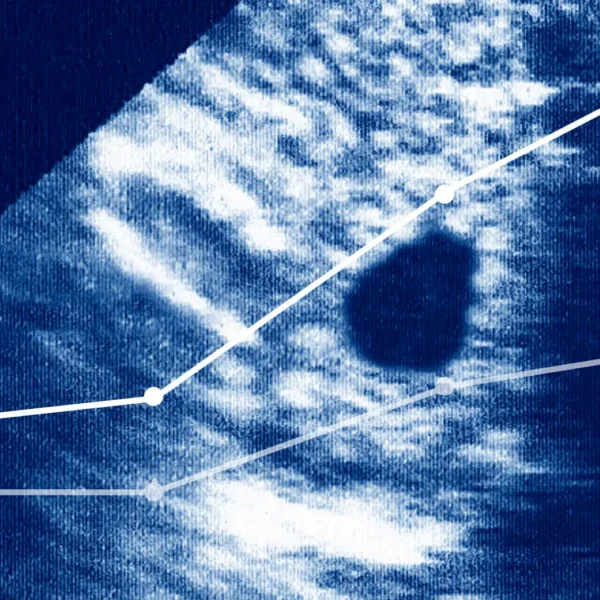
As the person was doing my ultrasound, I was looking at my partner. He was looking at me. I looked at the monitor, and I couldn’t see anything.
Then all of a sudden, I heard a heartbeat.
That’s when I realized they were playing a false heartbeat sound to try to pull at my heartstrings.
I knew it was fake because it wasn’t coming from the machine. It sounded like it was coming from a speaker somewhere else. It sounded really loud. It just didn’t sound right.
That’s when I realized: This is not a clinic. This is not a health care center at all. Where are we? How is this allowed?
My partner and I looked at each other and said, “We need to get out of here. Now.”
I looked at the monitor, and I couldn’t see anything. Then all of a sudden, I heard a heartbeat. That’s when I realized they were playing a false heartbeat sound to try to pull at my heartstrings.
The counselor came back with a printout of the ultrasound, which I had never asked for and didn’t want. It was one last attempt to pull at our heartstrings and change my mind.
But my mind wasn’t changing.
She handed me the printout and even said, “Oh, you can pick out a frame!”
I said, “No, thank you. We’re done here. This is all I needed. I just needed my paperwork. We’re leaving.”
As we walked to our car, the male counselor followed us into the parking lot. He wasn’t trying to talk to me—the pregnant person, the person who was actually there for care. He was trying to get my boyfriend’s attention. He kept saying, “Hey, man! Come here!”
My boyfriend said, “No. We’re done here. I have nothing to say to you.”
I remember standing there thinking, This really isn’t right. Clinics don’t do this.
Later, the counselor used the emergency contact information we’d written on the paperwork to text my boyfriend for days afterward, trying to get him to come back. Eventually, my boyfriend blocked him.
When we finally left, I just felt like I was in the Twilight Zone. I felt so weird.
I kept thinking, “Who else are they doing this to? Who else believes it?”
The next day I went to Planned Parenthood. I told them what had happened. They weren’t surprised. They confirmed that I was only 22 days pregnant. At that gestational age, it was medically impossible to hear a heartbeat. That’s when I had to laugh because I was so mad.
I kept thinking, Who else are they doing this to? Who else believes it?
Because it’s very believable if you don’t know what to expect. If you didn’t have sex education. If you didn’t have health education. That’s nobody’s fault. And if you’re very religious, they prey on that.
That was my first encounter with a crisis pregnancy center.
Luckily, it was my last.
I know what it’s like to go somewhere where you think it’s safe, where you think they’re gonna help you, and then find out it’s the total opposite.
Now that there’s a total abortion ban in Texas, crisis pregnancy centers have grown exponentially. There are hundreds of centers across the state. People are going to see the signs. They’re going to see the billboards. They’re going to Google, just like I did. They’re going to find these places and be subjected to false information instead of health care.
Crisis pregnancy centers are not real medical clinics. They deceive people. They don’t provide accurate medical information, and they don’t provide real health care. I know what it’s like to go somewhere where you think it’s safe, where you think they’re gonna help you, and then find out it’s the total opposite.
Because of my experience, I know what people need, especially people who’ve already gone to a crisis pregnancy center or are thinking about going to one. Otherwise, I never would’ve known. I wasn’t aware of crisis pregnancy centers until I went to one myself. These days I work as the programs coordinator at an abortion fund. I work on our helpline and text line, helping people seeking abortion care navigate this landscape. Most people who call us are scared. Some are immigrants who are afraid to cross state lines. Some are already parents trying to take care of the children they already have. Some have disabilities that make travel almost impossible. Some are teenagers who have no idea what to do.
We connect people with actual clinics and actual resources. We listen first. We make sure they know they’re not alone. I know I felt alone. So when people call us scared, I remember I was there too. I’m grateful for my experience because it’s helped me provide more compassionate responses and more compassionate care to the people who reach out to us.
People often tell me abortion bans don’t affect them. I disagree. Everybody loves someone who’s had an abortion.
I didn’t tell anyone besides my partner for years because I thought my family wouldn’t love me anymore. When I finally told my brother, he said, “I love you. You did what was best for you, and that’s not going to change.”
If this happened to you or someone you love, contact Abortion in America or reach out to our team directly at Amplify Legal.
explore more stories from abortion in america
She thought she found an abortion clinic. It was a crisis pregnancy center.
The abortion she needed made room for the family she wanted.